
H-Beams
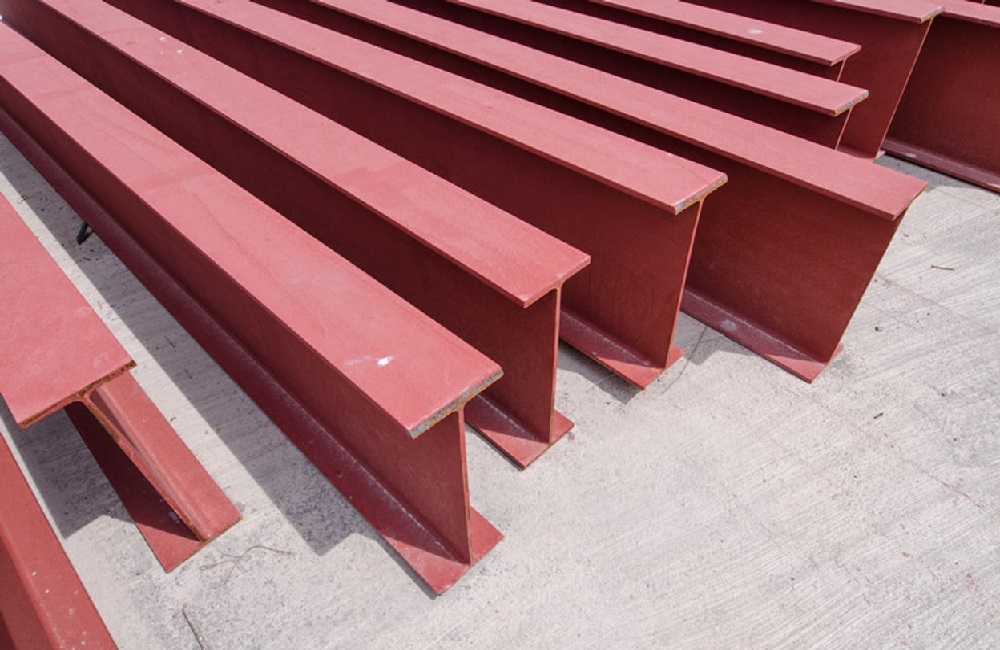
H-beams, also known as H-section beams or wide-flange beams, are structural steel members with a distinctive cross-section resembling the capital letter "H". They are characterized by a central vertical section called the web and two horizontal flanges at the top and bottom. H-beams are widely used in construction and various industrial applications for their strength, stability, and ability to support heavy loads.
Key Features of H-Beams:
-
Shape:
The cross-section resembles the letter "H", with a central web and two flanges.
-
Load Bearing:
H-beams are designed to distribute weight over a wide area, making them ideal for supporting heavy loads in buildings, bridges, and other structures.
-
Wide Flanges:
The flanges are typically wider than the web, contributing to the beam's ability to resist bending and provide stability.
-
Material:
H-beams are typically made from steel, such as carbon steel or low-alloy steel.
-
Manufacturing:
They can be produced through hot-rolling or welding, with variations in processing techniques and material usage.
-
Applications:
H-beams are used in various construction projects, including building frameworks, bridge supports, and industrial structures.
H-Beams vs. I-Beams:
While both H-beams and I-beams are structural steel members, they differ in their flange design. H-beams have flanges that are typically wider and may be of equal thickness across the length of the beam, while I-beams have flanges that are narrower and may not be of equal thickness.
Advantages of H-Beams:
-
High Strength and Rigidity:
H-beams provide excellent structural support and resistance to bending and compression.
-
Versatility:
They can be used in a wide range of applications, from small residential buildings to large industrial complexes.
-
Durability:
H-beams are made from strong and durable materials, ensuring long-term structural integrity.
-
Cost-Effectiveness:
H-beams can be a cost-effective solution for many construction projects due to their efficient design and manufacturing.